RAD Registry Prep logo

Fluoro & OR Guide

Sterile basics

In surgery you are almost always the non-sterile person, working next to people who are scrubbed in. You don't have to know every surgical rule. You have to know where the sterile field is and how to stay out of it, and you have to speak up if you touch it.

What the ARRT tests

  • Surgical asepsis (sterile technique) removes all microorganisms; medical asepsis (clean technique) reduces them.
  • A sterile gown is sterile only in front, from chest to the level of the sterile field, and the sleeves to about 2 inches above the elbow. The back is not sterile.
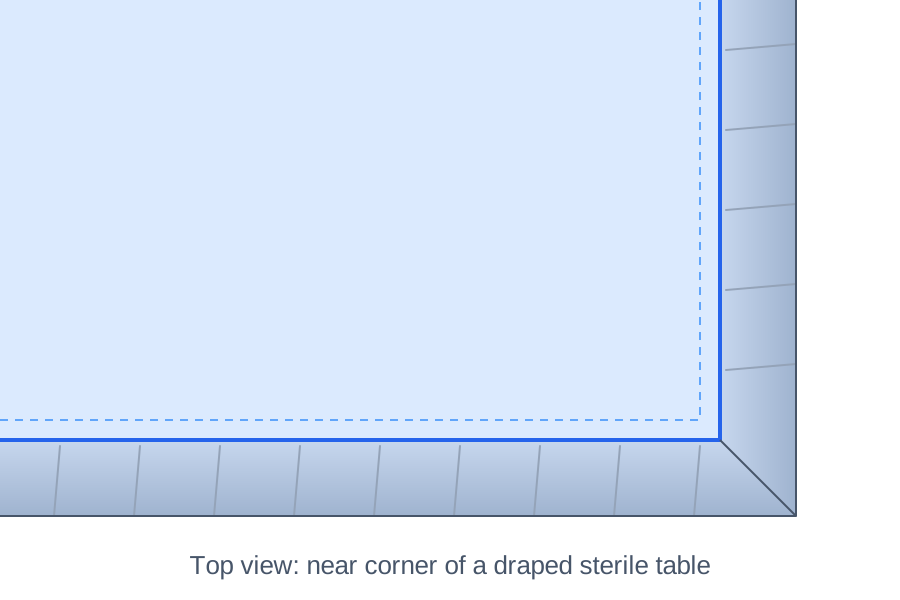
  • Only the top of a draped table is sterile. Anything below table level is not.
  • The edge of a sterile wrap or drape (about 1 inch) is not sterile.
  • If in doubt, it is not sterile. Report a break in technique right away.

The basics

Where the sterile field is

  • The draped patient and the instrument tables (back table and Mayo stand), at and above table level.
  • The scrubbed people: the surgeon, assistant and scrub tech, front of the gown between chest and table level, and the gloved hands.
  • The sterile drape over the C-arm once it's on. The part of the drape that hangs below the table is no longer sterile.

How a non-sterile person moves

  • Keep at least 1 foot (30 cm) from anything sterile.
  • Face the sterile field when you pass it; never turn your back to it at close range.
  • Never reach over a sterile field, and never walk between two sterile areas (for example between the scrub tech and the back table).
  • Move slowly. Fast moves stir air and make it easier to brush a drape.
  • Scrubbed people pass each other front to front or back to back; you just stay out of the way.

Dressing for the OR

  • Clean scrubs, a cap that covers all hair, and a mask in the restricted area (the OR suite itself).
  • Lead goes on before you go in. Scrubbed staff wear lead under their sterile gowns, so ask before the case whether they want aprons ready.
  • Follow your hospital's rules for shoe covers, jewelry and nails.

Draping the C-arm

  • The scrub tech or surgeon handles the sterile side of the drape. You hold or guide only the non-sterile outside, and the receptor end goes in first.
  • Some teams drape only the receptor end; others bag the whole C. Ask before the case.
  • After draping, any part of the C-arm under the drape that comes up from below the table is suspect. Point it out if a lateral swing drags the drape.

Your job

  • Know the field before the case starts: where the back table and Mayo stand are, and where the C-arm will swing.
  • Stay present for the time-out (right patient, right procedure, right side) and speak up if something doesn't match.
  • Ask the scrub tech when it's safe to move in, and announce each move of the C-arm.

Watch out for

  • If you touch or think you touched anything sterile, say so immediately. It's expected and normal; a hidden contamination is the real problem.
  • The C-arm drape tearing or sliding as you go lateral.
  • Your lead apron or badge brushing a draped table as you pass.
  • Backing up into the back table while watching the monitor.

Tips from the room

  • Before the case, ask the scrub tech: "Where do you want me and the C-arm?" Scrub techs are your best ally in the room.
  • When in doubt, stand still and ask. Nobody minds a question; everybody minds a contaminated tray.

Images

A draped table: only the top is sterile; the overhang and the 1-inch edge are not.

Quick check

1. This mobile C-arm is parked in the operating room without a sterile cover. The surgeon asks for it to be brought over the open incision for fluoroscopy. What must be done FIRST?
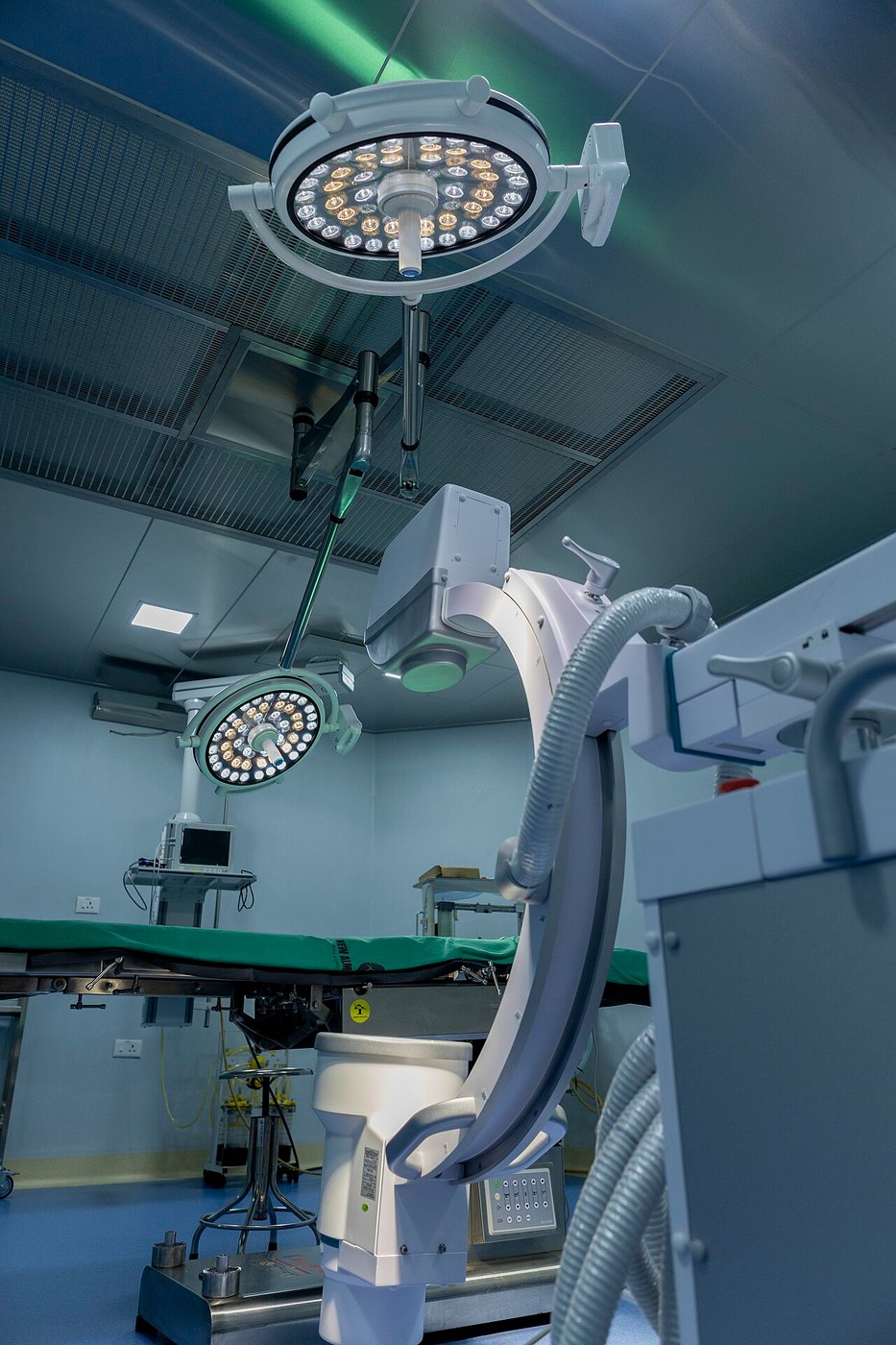

Image: Drnabeelmohdkk1. CC0.

2. A sterile tray has been opened and covered with a sterile drape for a fluoroscopic joint injection. Which part of the draped tray is considered NONSTERILE?

3. A radiographer wearing a sterile gown and gloves is assisting with a fluoroscopic joint aspiration. Where should the radiographer keep the gloved hands when they are not in use?

4. A spinal needle used for a lumbar puncture contains a removable stylet. What is the main purpose of the stylet?

5. A radiographer wearing a sterile gown assists during a sterile fluoroscopic procedure. Which part of the gown is considered sterile?

Practice it in 3D

More in the guide