
Patient Care · Pharmacology and contrast2 min read5-question check
Contrast Media Reactions and Management
Stay with the patient after injection, spot the early signs, and know your first steps if a reaction starts.
The rule
Any patient who receives iodinated contrast can react. Most reactions are mild, but a few are severe. Most serious reactions begin within the first 20 minutes, many within the first few minutes, so the radiographer stays with the patient during and after the injection and watches closely. Emergency drugs, oxygen, suction, and the crash cart must be ready and their locations known.
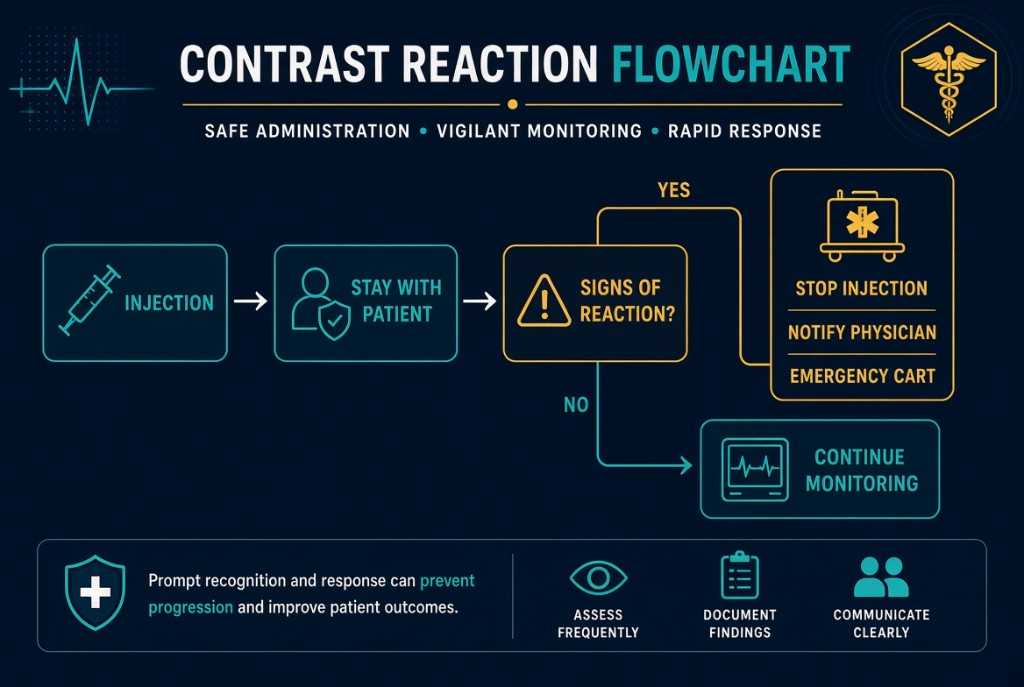
Contrast reaction flowchart
Recognizing reactions
Reactions are grouped by severity. Mild reactions include nausea, vomiting, a few hives, itching, sneezing, and a warm flushed feeling. Moderate reactions include widespread hives, facial swelling without breathing trouble, and wheezing. Severe reactions include swelling of the throat with stridor, severe bronchospasm, anaphylactic shock, seizures, and cardiac arrest. Low blood pressure with a fast heart rate suggests anaphylaxis. Low blood pressure with a slow heart rate suggests a vasovagal reaction, which often comes with sweating and paleness.
Risk factors
The strongest risk factor is a previous reaction to the same class of contrast. Asthma and a history of significant allergies also raise risk. An allergy to shellfish or seafood does not specifically predict a contrast reaction, despite the old myth. Anxiety can make reactions worse, so calm, clear communication helps. Before injection, screen the patient and report any history of a prior reaction to the radiologist.
First response
If a reaction starts, stop the injection but leave the IV catheter in place, because it may be needed to give emergency drugs. Call for help and notify the radiologist or physician. Stay with the patient, monitor breathing, pulse, and blood pressure, and bring the emergency cart. Epinephrine is the main drug for anaphylaxis, given by order. Document the reaction and treatment. If contrast leaks into tissue around the IV, called extravasation, stop the injection, elevate the limb, and notify the physician.
Clinical Example
Two minutes into a contrast injection, a patient begins wheezing and says her throat feels tight. The radiographer stops the injection, keeps the IV in, calls for the radiologist, and brings the crash cart. She checks vital signs while help arrives.
Common Mistakes
- Removing the IV as soon as a reaction starts.
- Leaving the patient alone right after injection.
- Treating shellfish allergy as a specific predictor of reaction.
- Waiting to see if symptoms pass before notifying the physician.
Why It Matters
Quick recognition and action can turn a deadly reaction into a manageable one. The registry tests reaction signs, risk factors, and the radiographer's first steps.
Key Relationships
- Most serious reactions → within the first 20 minutes
- Prior contrast reaction → strongest risk factor
- Low blood pressure + fast pulse → anaphylaxis
- Low blood pressure + slow pulse → vasovagal
- Reaction → stop injection, keep IV, call for help