
Procedures · Head, spine and pelvis3 min read5-question check
Cervical spine film check
Lateral to the top of T1 with the shoulders down, open disc spaces on the AP axial, a clear dens through the open mouth, and open foramina on the obliques.
The lateral
The lateral C-spine is the first and most important film in trauma. Take it at 60 to 72 inches to reduce magnification from the long OID, with the CR horizontal at C4, about the level of the thyroid cartilage. All seven cervical vertebrae and the top of T1 must show. Have the patient relax and push the shoulders down, and expose on full expiration, which drops the shoulders further. Raise the chin a little so the mandible clears C1 and C2. On a straight lateral the back edges of the vertebral bodies line up as one line. Doubled back edges mean rotation.
AP axial and open mouth
The AP axial is angled 15 to 20 degrees cephalad, centered at C4, so the beam runs through the open intervertebral disc spaces. It shows C3 to about T2, with the spinous processes in the midline and equally spaced between the pedicles. The open mouth view, the AP of C1 and C2, lines the bottom of the upper incisors up with the base of the skull, the mastoid tips. The dens and the lateral masses of C1 should show clearly through the open mouth. If the upper incisors cover the dens, raise the chin. If the base of the skull covers it, lower the chin. Never move a trauma patient's head before the lateral is cleared.
The obliques
The obliques show the intervertebral foramina. Turn the whole body 45 degrees. AP obliques, the RPO and LPO, use 15 to 20 degrees cephalad and show the foramina on the side away from the IR. PA obliques, the RAO and LAO, use 15 to 20 degrees caudad and show the foramina on the side closest to the IR. A good oblique shows open oval foramina from C2 to C7. If the foramina look narrow, the rotation was off. Raise the chin so the mandible does not cover the upper vertebrae.
When C7 will not show
If C7 still hides behind the shoulders on the lateral, take a swimmer's lateral, the cervicothoracic lateral. Raise the arm closest to the IR over the head and push the other shoulder down, so the beam passes between the humeral heads. C7 and T1 show through the shoulders.
Read the films
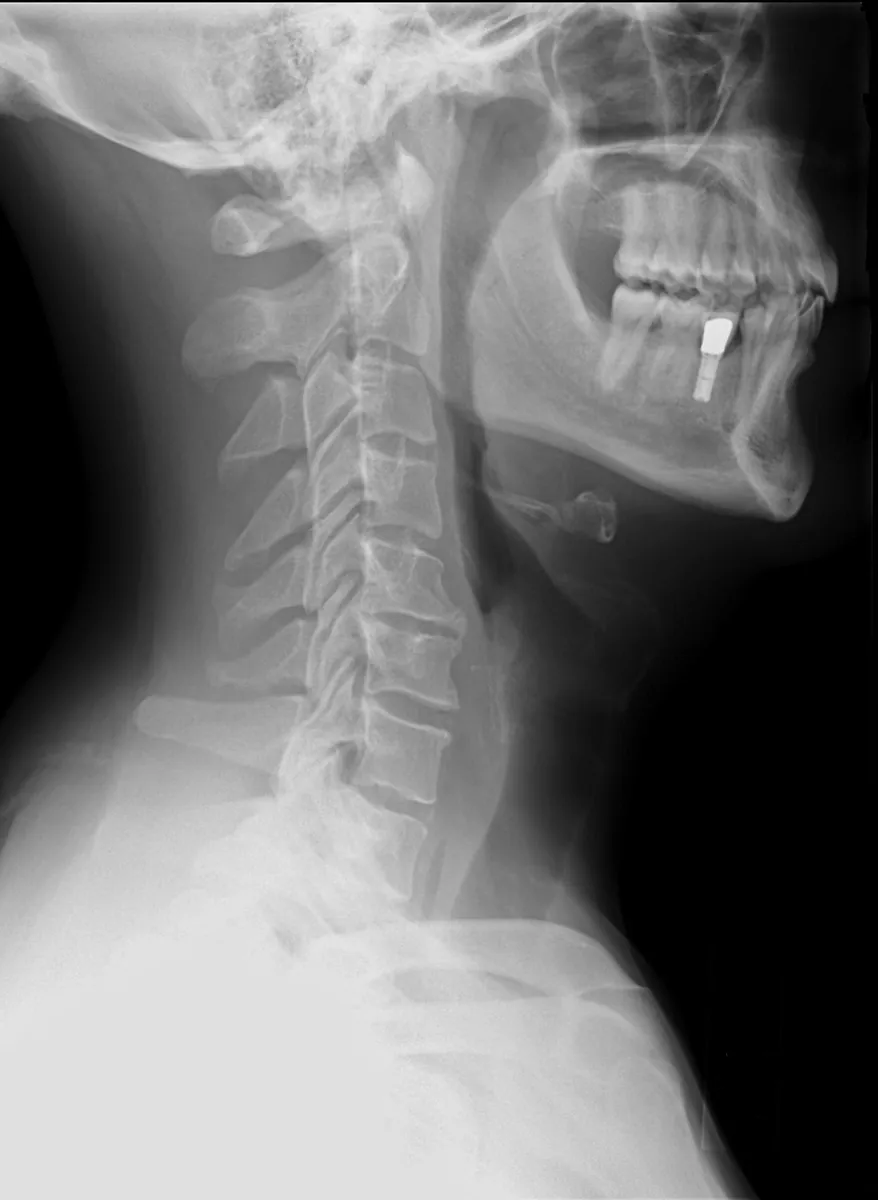
KeeperLateral C-spine: a keeper
Look for: The shoulders are down and the cervical vertebrae show down to the cervicothoracic junction. The back edges of the bodies line up, and the mandible is clear of the upper spine.
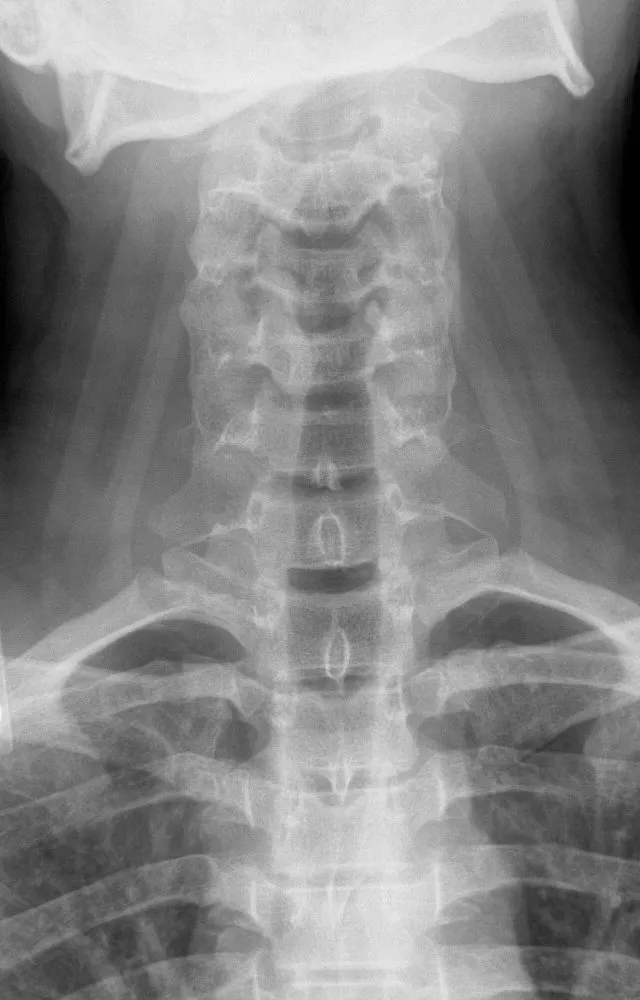
KeeperAP axial C-spine: a keeper
Look for: The disc spaces are open from the cephalad angle, and the spinous processes are in the midline between the pedicles.
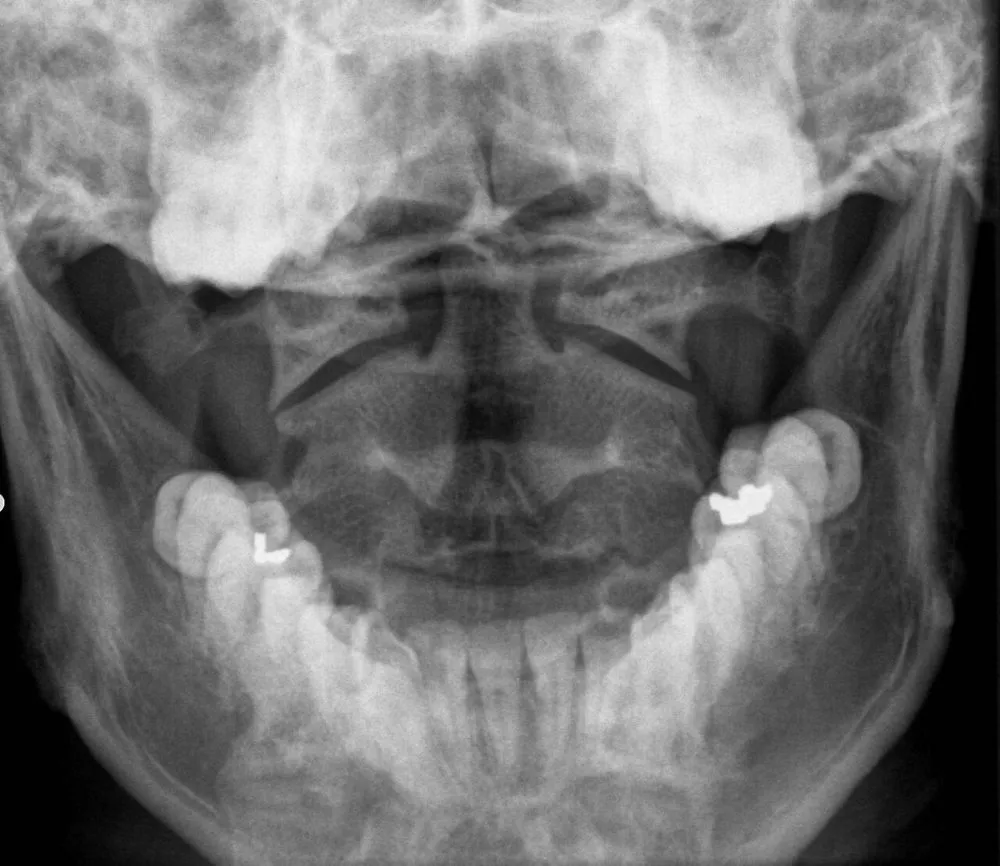
KeeperOpen mouth (C1–C2)
Look for: C1 and C2 show through the open mouth, with the lateral masses of C1 on each side. Check that neither the upper teeth nor the base of the skull covers the dens.
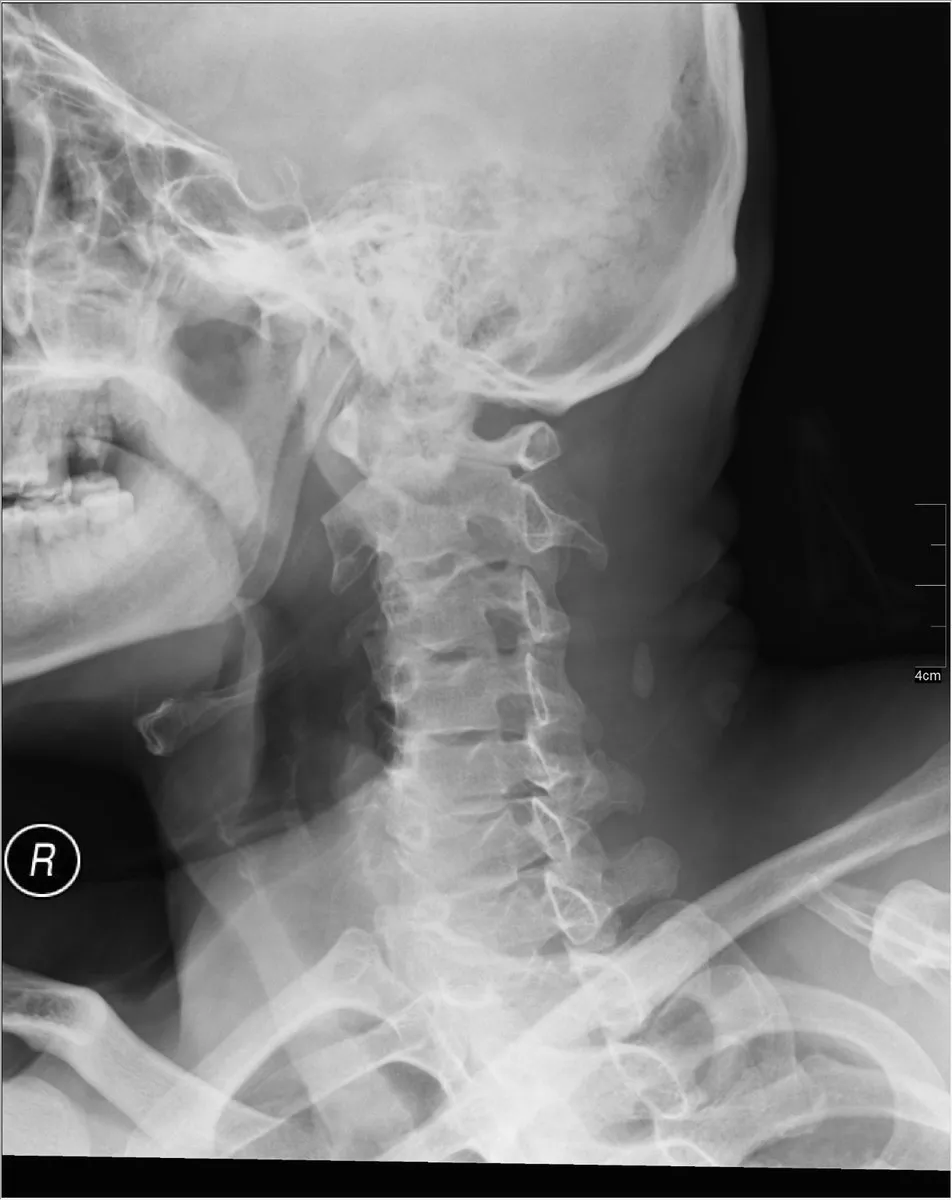
KeeperOblique C-spine: a keeper
Look for: The intervertebral foramina show as open ovals down the spine, and the chin is up so the mandible does not cover the upper vertebrae.
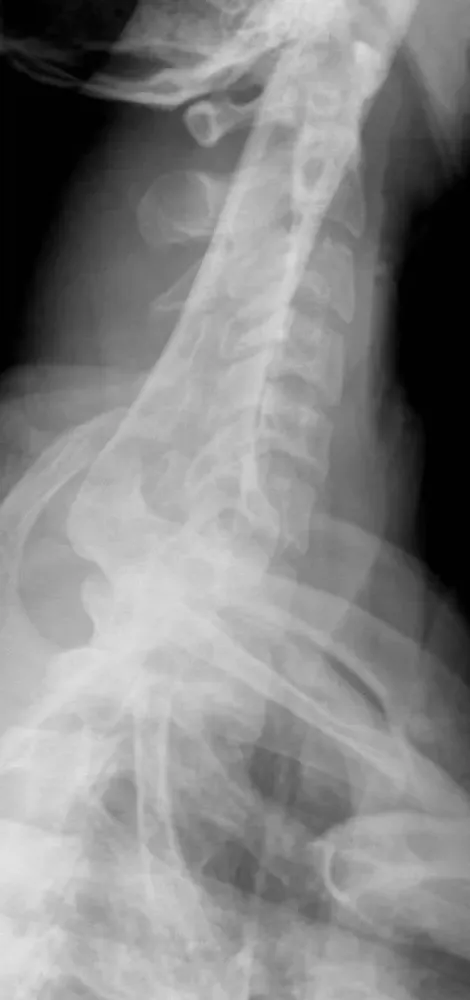
KeeperSwimmer's lateral: a keeper
Look for: C7 and T1 show between the humeral heads. This is the fix when the shoulders hide the bottom of the C-spine.
Clinical Example
A trauma patient in a collar has a lateral C-spine that stops at C6. You ask them to breathe out and relax the shoulders down, and repeat. C7 is still hidden, so you take a swimmer's lateral without moving the neck, which shows C7 and T1.
Common Mistakes
- Accepting a lateral that does not show C7 and the top of T1.
- Taking the lateral at 40 inches, which magnifies the spine.
- Moving a trauma patient's head for the open mouth view before the lateral is cleared.
- Mixing up the obliques: AP obliques show the side away from the IR, PA obliques the side closest.
Why It Matters
A cervical injury missed because C7 was hidden can be catastrophic. The registry tests the angles, which foramina each oblique shows, and how to fix the open mouth view.
Key Relationships
- Lateral: 60 to 72 inch SID, C1 to the top of T1
- AP axial: 15 to 20° cephalad at C4
- Open mouth: incisors over the dens → raise the chin
- Open mouth: skull base over the dens → lower the chin
- AP oblique → side away from the IR; PA oblique → side closest