
Procedures · Extremities3 min read5-question check
Ankle and foot film check
Whole mortise open on the mortise view, talar domes stacked on the lateral, even metatarsal spacing on the AP foot, and metatarsal bases 3 to 5 free on the oblique.
AP and mortise ankle
On the AP ankle, the foot is dorsiflexed and the long axis of the foot is vertical. The medial mortise is open, but the fibula overlaps the talus, so the lateral side of the mortise looks closed. That is normal for an AP. For the mortise view, turn the whole leg in 15 to 20 degrees until the intermalleolar line is parallel to the IR. The whole mortise, medial, superior and lateral, should then be open with no overlap of the talus on either malleolus. If the lateral side is still closed, turn the leg in a little more.
Lateral ankle
The lateral ankle is a mediolateral with the foot dorsiflexed 90 degrees and the CR at the medial malleolus. On a good lateral, the medial and lateral edges of the talar dome superimpose, the tibiotalar joint is open, and the fibula lies over the back half of the tibia. If the talar domes show as two outlines, the leg is rotated; adjust it until the knee and leg are a true lateral. Include the base of the 5th metatarsal, a common fracture site after an ankle sprain.
AP and oblique foot
For the AP foot, angle the CR 10 degrees toward the heel and center at the base of the 3rd metatarsal. The angle opens the tarsometatarsal joints. The spaces between the 2nd, 3rd and 4th metatarsal shafts should look about equal. Uneven spacing means the foot was tilted. The AP medial oblique turns the foot in 30 to 40 degrees. The bases of the 3rd to 5th metatarsals are free of overlap, and the cuboid and its joints are open. Too little rotation leaves the bases overlapping.
Lateral foot
On the lateral foot, the plantar surface is perpendicular to the IR. The metatarsals mostly superimpose, the tibiotalar joint is open, and the fibula overlaps the back half of the tibia. Include the whole foot, from the toes to the back of the heel, and about an inch of the distal leg.
Read the films
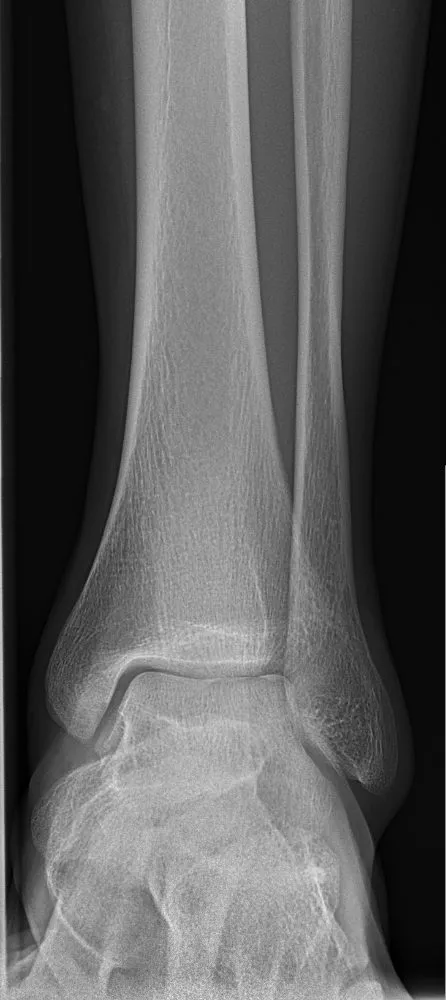
KeeperAP ankle: a keeper
Look for: The medial mortise is open. The fibula overlaps the talus laterally, which is expected on an AP, not a miss.
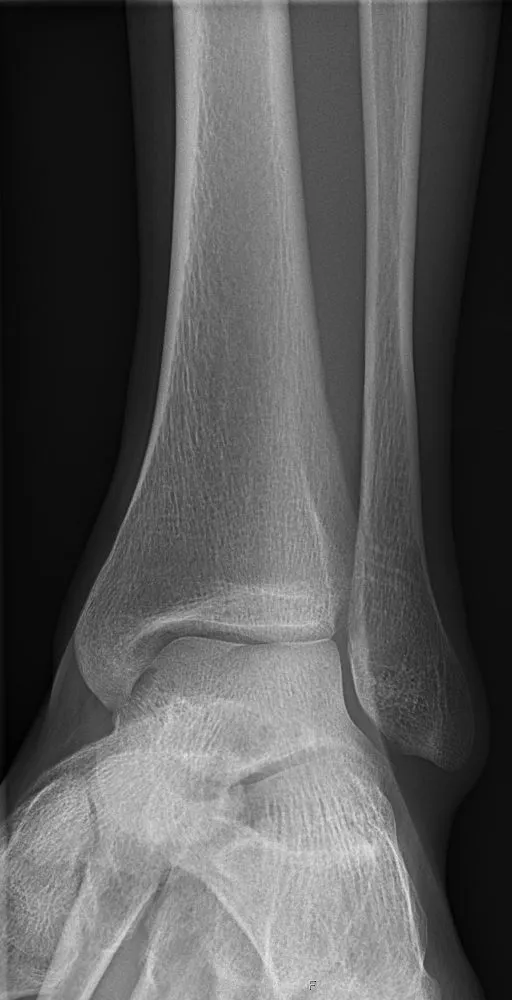
KeeperMortise: a keeper
Look for: The whole mortise is open: medial, superior and lateral. The talus does not overlap either malleolus.
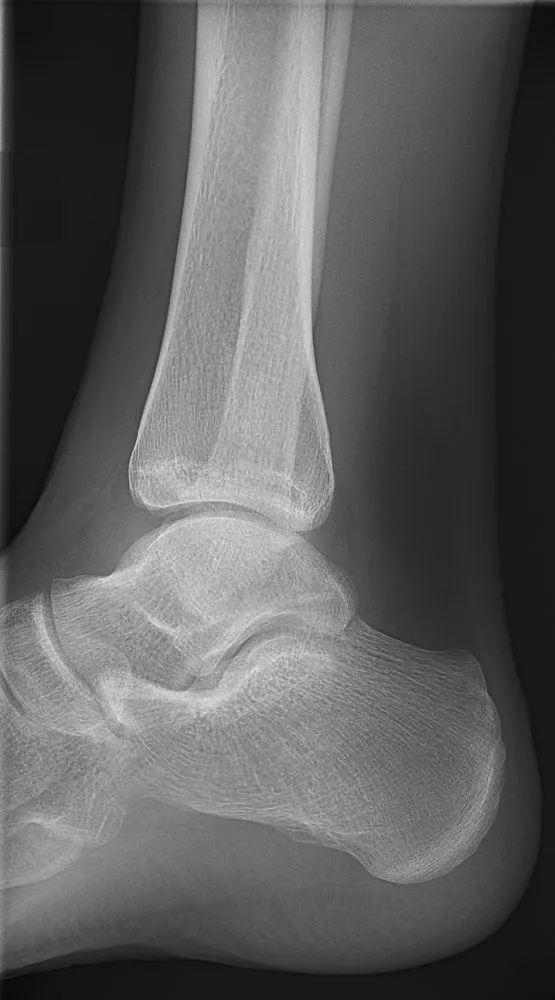
KeeperLateral ankle: a keeper
Look for: The talar dome is one smooth outline, the tibiotalar joint is open, and the fibula lies over the back half of the tibia.
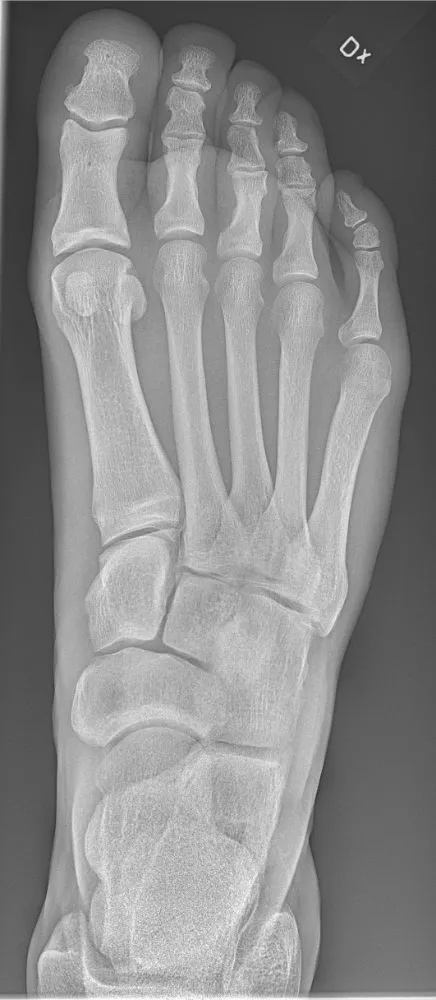
KeeperAP foot: a keeper
Look for: The tarsometatarsal joints are open and the spaces between the 2nd to 4th metatarsal shafts are about equal.
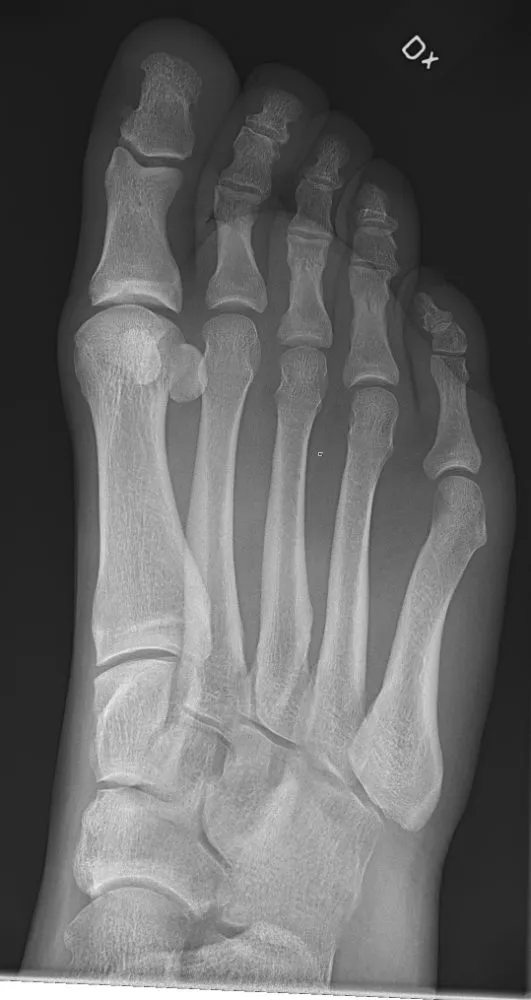
KeeperAP medial oblique foot: a keeper
Look for: The bases of the 3rd to 5th metatarsals are free of overlap and the cuboid joints are open.
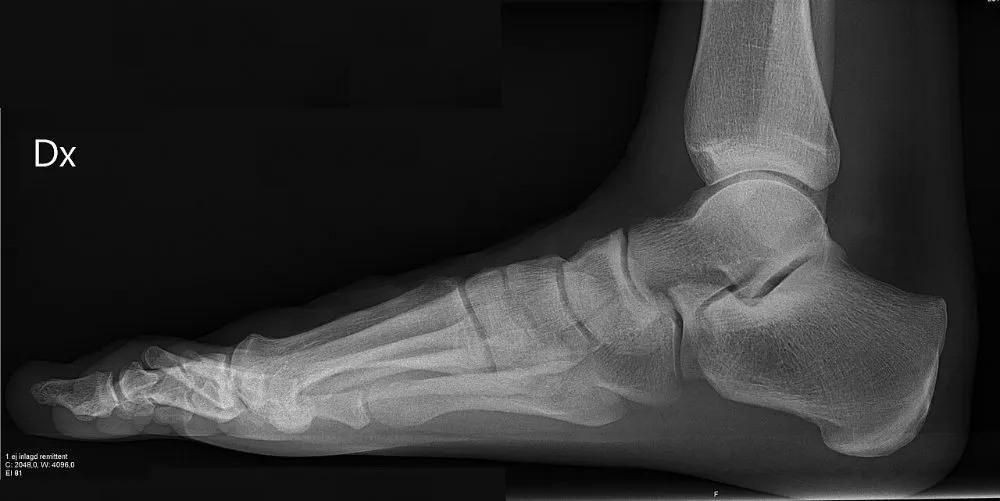
KeeperLateral foot: a keeper
Look for: The whole foot is included, the metatarsals mostly superimpose, and the tibiotalar joint is open with the fibula over the back of the tibia.
Clinical Example
Your mortise view still shows the fibula overlapping the lateral talus. You turn the leg in another 5 degrees, checking that the intermalleolar line is parallel to the IR, and repeat. The whole mortise opens.
Common Mistakes
- Calling the closed lateral mortise on an AP ankle a miss; it is normal for an AP.
- Turning only the foot for the mortise instead of the whole leg.
- Cutting off the base of the 5th metatarsal on the lateral ankle.
- Leaving the CR perpendicular on the AP foot, which closes the tarsometatarsal joints.
Why It Matters
Ankle and foot films come in every day from the ER and urgent care. A mortise that is not fully open can hide widening that changes treatment, and a missed 5th metatarsal fracture is a common callback.
Key Relationships
- Mortise: leg turned in 15 to 20°, whole mortise open
- Lateral ankle: talar domes split → rotation
- AP foot: CR 10° toward the heel, base of the 3rd metatarsal
- Uneven 2nd to 4th metatarsal spacing → foot tilted
- Medial oblique: 3rd to 5th metatarsal bases free