
Procedures · Chest, abdomen and GI3 min read5-question check
Abdomen film check
KUB from the kidneys to the symphysis with the patient straight, and for the acute series, horizontal beams after the patient has stayed in position long enough for air to rise.
The KUB
The KUB is a supine AP abdomen centered at the iliac crest, exposed on expiration so the diaphragm rises and the abdomen is less compressed. The bottom of the field must include the symphysis pubis. On a tall or wide patient, the kidneys and the bladder may not both fit on one IR; take two images, crosswise if needed, rather than cut off either end. Check rotation the same way as a pelvis: the iliac wings and obturator foramina should look the same on both sides and the spinous processes should sit in the midline.
Upright abdomen
The upright AP abdomen shows air-fluid levels and free air under the diaphragm, but only with a horizontal beam and only if the patient has been upright for a while. Have the patient sit or stand for at least 5 minutes before the exposure, 10 to 20 minutes is better, so air can rise. Center about 2 inches above the iliac crest so the diaphragm is on the film. Expose on expiration. An upright film that cuts off the diaphragm cannot show free air and must be repeated.
Left lateral decubitus
When the patient cannot stand, the left lateral decubitus does the same job. The patient lies on the left side, right side up, and the beam is horizontal, AP. Free air rises to the right side and shows against the liver, away from the gas in the stomach, which sits on the left. Wait at least 5 minutes in position, and make sure the upper side of the abdomen and the diaphragm are inside the field. That is where the air will be.
The acute abdomen series
The acute abdomen series is usually a supine abdomen, an upright abdomen or a left lateral decubitus, and an upright PA chest. The chest is the most sensitive film for small amounts of free air under the diaphragm. Do the upright views after the patient has been in position long enough, and mark which side is up on the decubitus.
Read the films
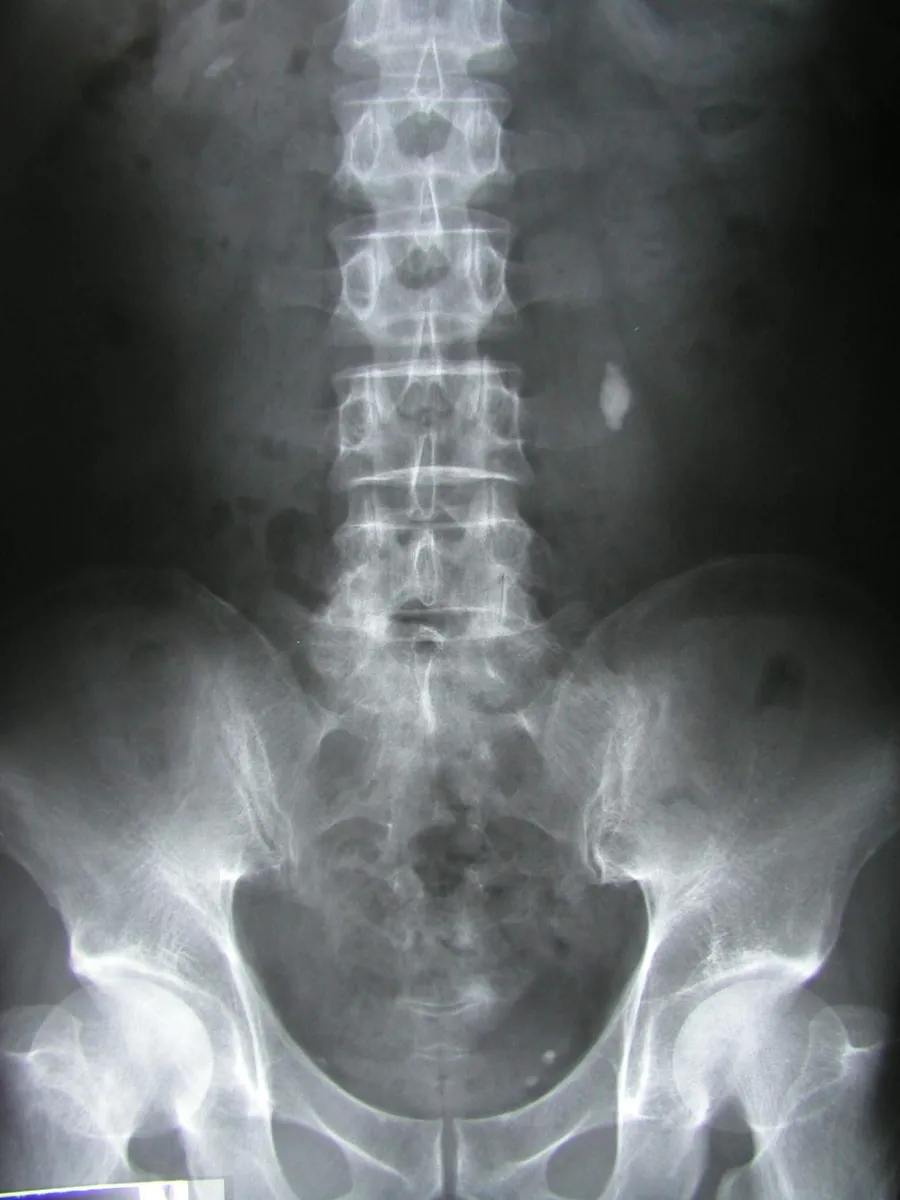
KeeperSupine KUB
Look for: The spine is in the midline and the iliac wings look the same on both sides, so the patient is straight. A small dense stone shows over the urinary tract, which is what a KUB is often ordered to find.
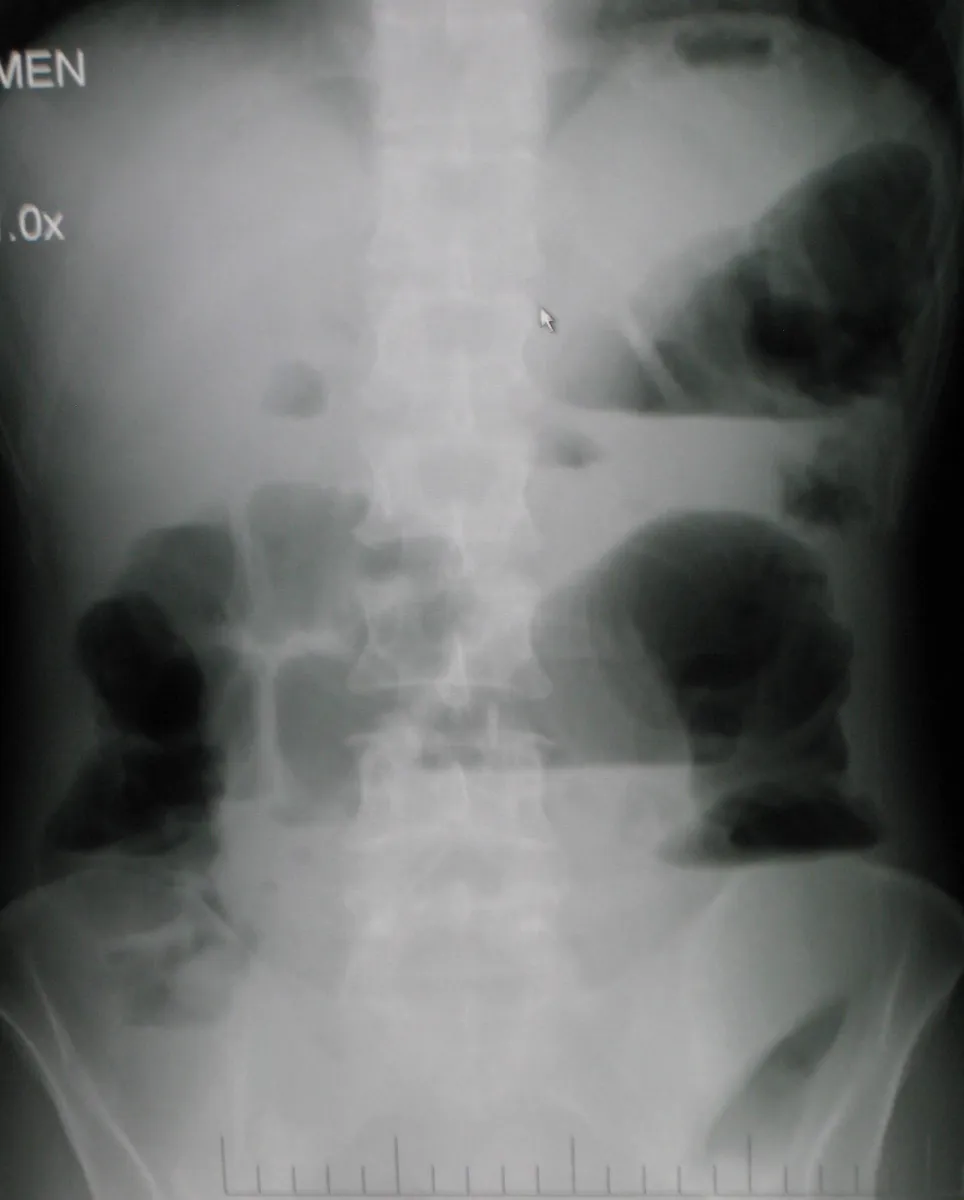
KeeperUpright abdomen: air-fluid levels
Look for: Dilated loops of bowel with flat air-fluid levels, a sign of obstruction. The flat levels only show because the patient was upright and the beam was horizontal.
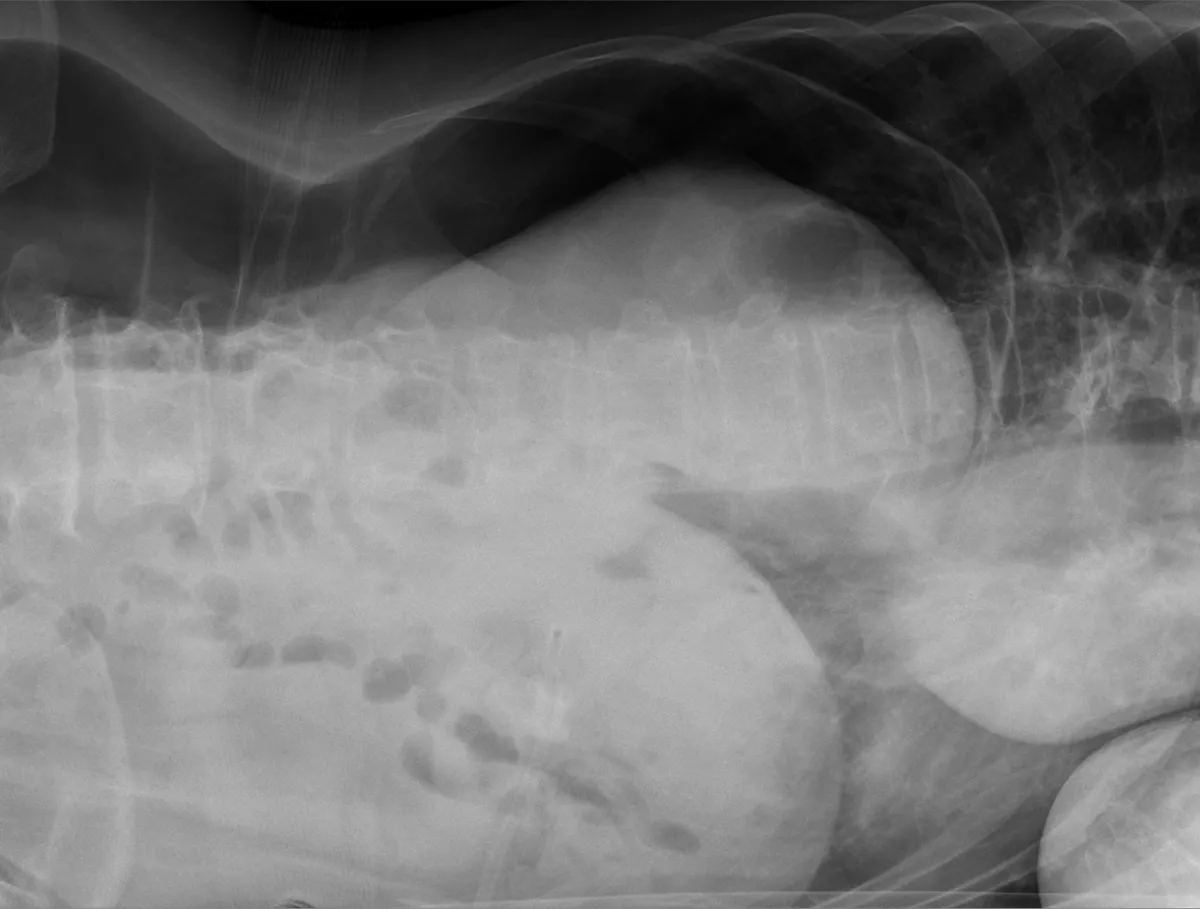
KeeperLeft lateral decubitus: free air
Look for: Free air has risen to the upper side of the abdomen, along the liver. The upper abdominal wall is inside the field, which is where free air collects.
Clinical Example
A post-op patient is too weak to stand for an upright abdomen. You turn them onto the left side, wait 10 minutes, then take a horizontal-beam AP with the right side up and the upper abdominal wall in the field. A thin dark stripe of free air shows along the liver.
Common Mistakes
- Cutting off the symphysis pubis on the KUB.
- Taking the upright film right after the patient sits up, before air can rise.
- Centering the upright abdomen at the crest, which can cut off the diaphragm.
- Using a vertical beam for a decubitus; it must be horizontal.
- Doing a right lateral decubitus for free air; the stomach gas on the left would hide it.
Why It Matters
Free air means a perforation, which is a surgical emergency. A film that cuts off the diaphragm or was taken too soon can miss it.
Key Relationships
- KUB: CR at the iliac crest, expiration, symphysis included
- Upright abdomen: CR about 2 inches above the crest, diaphragm included
- Upright or decubitus: at least 5 minutes in position first
- Left lateral decubitus: right side up, horizontal beam
- Best film for a small amount of free air: upright PA chest